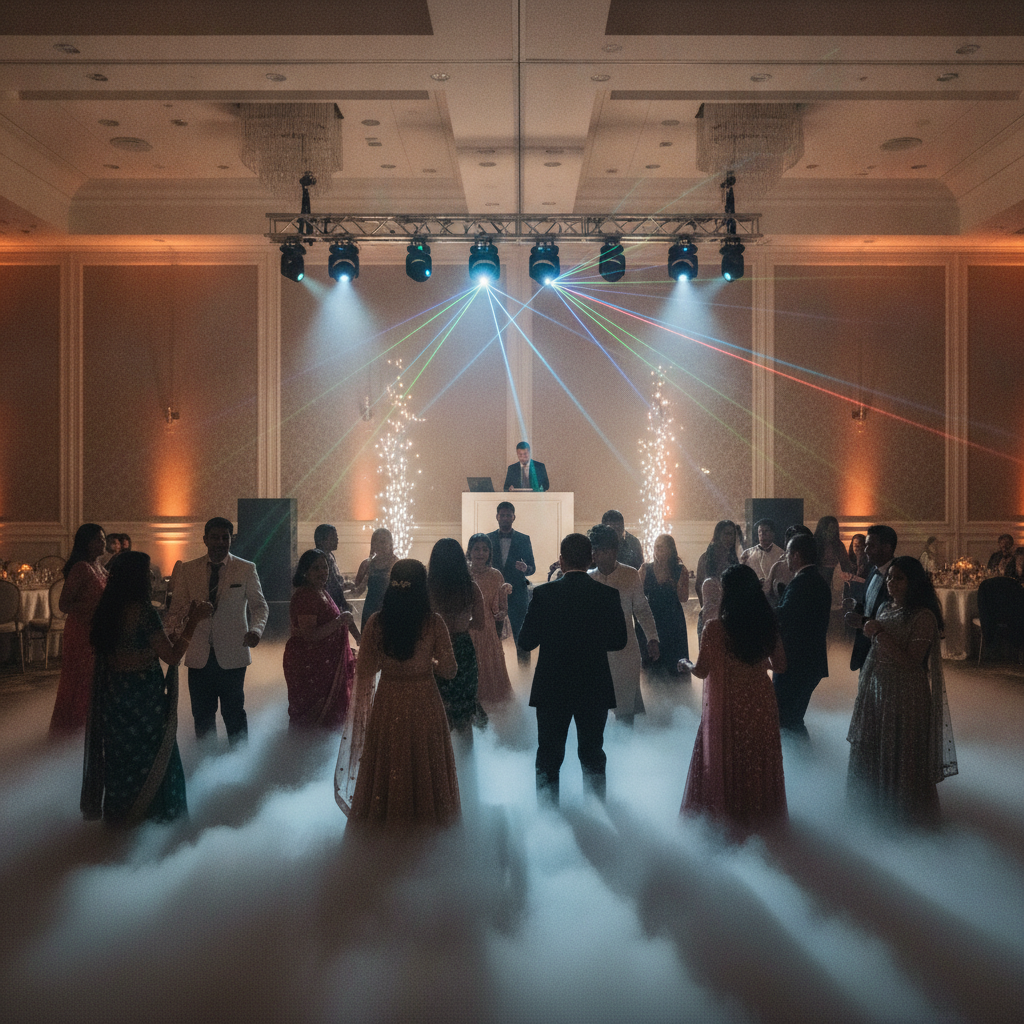
Reception Lighting Ideas for Weddings in Oakville 2026
Oakville-focused reception lighting ideas for weddings—map uplighting, lasers, sparks, and low fog to entrances, first dances, and dancing for cinematic, photo-ready moments.
Reception lighting ideas for weddings are the ways you shape mood, focus, and dance-floor energy with uplighting, moving heads, lasers, pinspots, and effects. In Oakville, tie light cues to your timeline—grand entrances, first dance, and dhol-fueled dancing—so every moment looks cinematic, reads cleanly on video, and feels coordinated with your DJ and MC.
By B-Town Entertainment • Last updated: 2026-07-10
| Service area | Oakville and the Greater Toronto Area |
|---|---|
| Core services | Professional DJ, MC & Event Hosting, Sound & Lighting, Luxury Décor & Stage, Photo & Cinematic Video, Live Dhol, Special Effects |
| Package paths | Essential DJ, Wedding Experience, Luxury Production, Full-Service Wedding |
| Lighting options | Uplighting, moving heads, lasers, pinspotting, wash lights |
| Effects | Cold spark fountains, dancing-on-clouds dry ice, haze/smoke (venue-permitting) |
Overview
Reception lighting turns a plain room into a story that follows your timeline. Layer warm ambient color for dinner, crisp spot highlights for entrances and speeches, and energetic beams for dancing. Program scene changes to your songs and MC script so looks shift on musical cues—not randomly.
We’ve stood in Oakville ballrooms at 6:00 p.m. watching the room glow from neutral daylight to candle-warm tones as guests arrive. When the first dance starts and the low fog rolls out, you can feel the room hush. That’s not an accident; it’s pre-programmed timing, safe effects placement, and clear comms between DJ, MC, lighting tech, and videography.
For an additional perspective on modern production enhancements, this overview of tech features that wow guests echoes the same principle: plan effects around your story, not the other way around.
Reception Lighting Ideas for Weddings: What They Actually Do
Lighting sets emotion, guides attention, and protects photo quality. The right recipe blends ambient washes, accents, and motion so faces are flattering, décor is defined, and your key moments land—both in the room and in the footage you’ll rewatch.
Why this matters for your reception
- Direct attention: We spotlight entrances, toasts, and performances so everyone can see without raising full-room brightness.
- Photo-first color: For dinner we sit near 2700–3000K warmth; for speeches a 3200–4000K front wash keeps skin tones natural.
- Dance-floor depth: Moving-head beams and (venue-approved) haze create depth; we hold looks 5–8 seconds so photographers can land the shot.
Concepts like layered ambient vs. accent light apply everywhere; for additional context on fixture layering, see these lighting layer insights and this explainer on integrated lighting systems.
The 6 Lighting Setups That Matter Most at South Asian Receptions
In GTA South Asian and multicultural receptions, six setups do the heavy lifting: warm uplighting, pinspotting, moving-head beams, monogram/texture gobos, laser looks, and a clean stage wash. Layer effects—cold sparks and dry-ice clouds—at entrances and the first dance for cinematic impact.
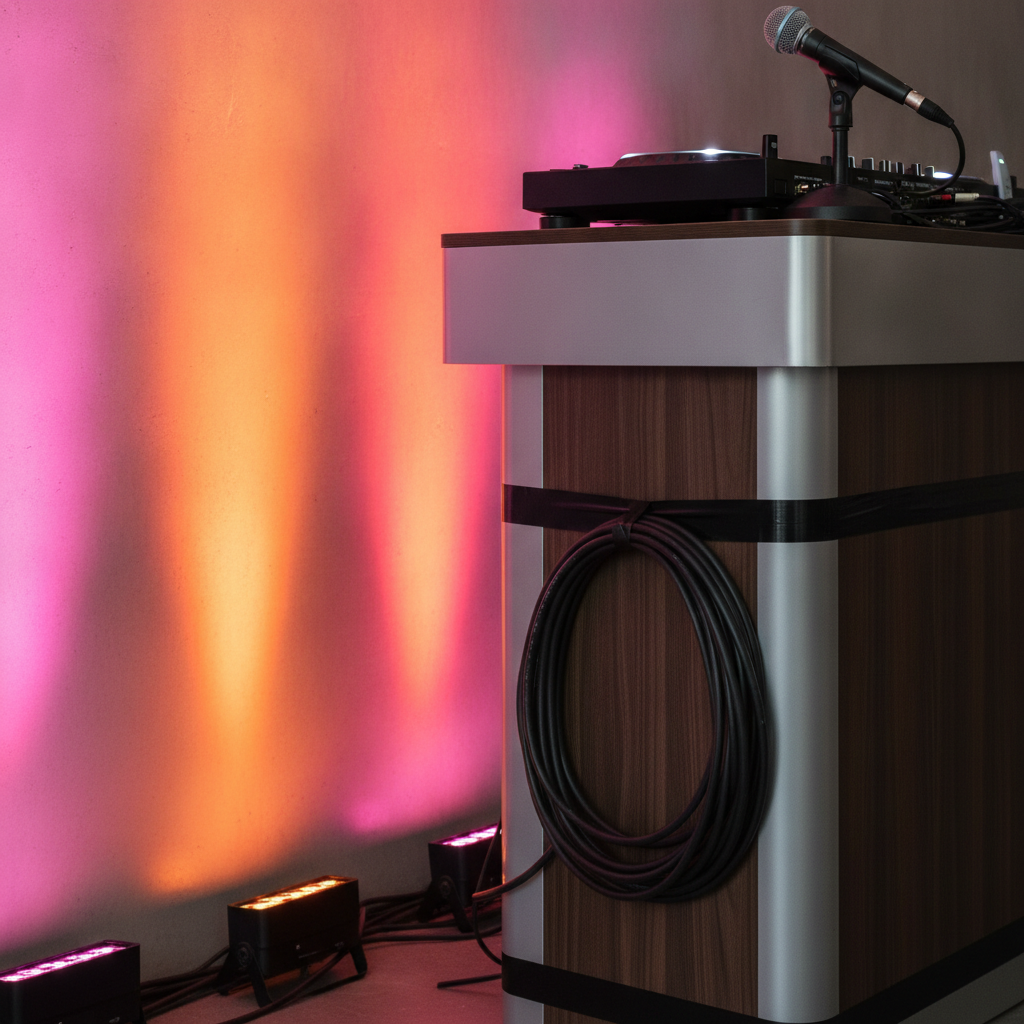
- Warm uplighting: 12–16 fixtures suit many Oakville ballrooms (150–200 guests). We run 20–30% brightness during dinner, then intensify or shift hue for entrances and dancing.
- Pinspotting: One pin per centerpiece (two for tall florals) plus a cake pin. This keeps tables glowing without blasting the whole room.
- Moving heads: Four heads minimum to cover an entrance walkway and dance floor; six to eight for larger rooms. Programmed sweeps on beat drops make entrances feel like a show.
- Gobo textures/monogram: Subtle breakup patterns add depth on walls or the dance floor. We keep monograms tasteful and sized so they don’t compete with the couple.
- Laser looks: Save for peak dance sets at 14‑ft+ ceiling heights; overhead fans help carry beams. If your venue doesn’t allow haze, we prioritize moving-head looks instead.
- Stage wash: Even 3200–4000K front wash on the head table and performance area so faces are clean for video and speeches stay readable.
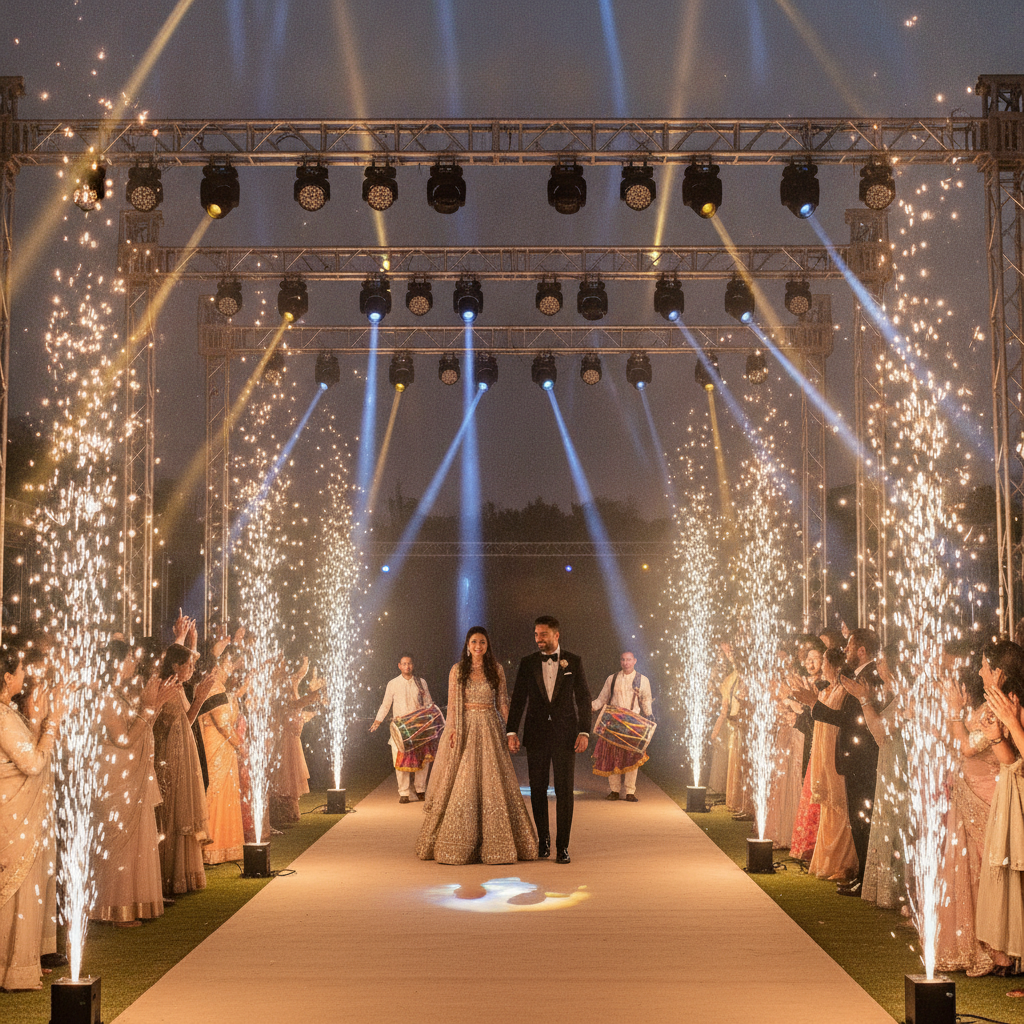
Effects that elevate: Two to four cold spark fountains near the stage (angled away from guests) and a controlled low fog for the first dance. We mark safe stand-off (typically 6–10 feet from fabrics and draping) and block operator sightlines so every cue fires cleanly.
Matching Lights to Your Reception Timeline (Entrance to Last Dance)
Map looks to your run of show: warm dinner washes and pinspots early, cinematic entrance sweeps, a romantic first-dance wash over low fog, then build into dynamic beams and laser accents for dhol and DJ sets. Scene changes trigger on beats and MC cues for seamless flow.
- Seating + dinner: 2700–3000K uplight warmth, 20–30% brightness; pinspots on florals; gentle stage wash at 3200–3600K.
- Grand entrances: Moving-head sweeps pre‑programmed to the entrance track. On comms you’ll hear: “Names… go!”—and we hit the sweeps and sparks together.
- First dance: Low fog rolls at the first chorus, romantic wash, no harsh strobes. We keep the look stable for 90–120 seconds so photo/video get clean frames.
- Performances/toasts: Tight front wash, no color chase. Two wireless handhelds plus a standby lav keep handoffs smooth.
- Open dance sets: If haze is allowed, we add depth to beams; lasers only during true peaks. Dhol segues get faster chases synced to 130–140 BPM.
- Last dance: Motion slows, tones warm back up, and we fade to a candlelit feel for a soft exit.
Behind the scenes, we hot‑key scenes (Dinner, Entrance, First Dance, Speeches, Performances, Open, Last Dance) so changes are instant. Our Sound & Lighting and Special Effects teams build the cue sheet with your MC during the final planning call.
Uplighting vs Lasers vs Special Effects — When to Use Each
Run uplighting all night to set mood and flatter photos. Reserve lasers for peak dance energy in taller rooms. Deploy special effects for cinematic moments only—the entrance and first dance—so they stay memorable, safe, and venue‑approved.
| System | Best use | Pros | Skip/Watch‑outs |
|---|---|---|---|
| Uplighting | Dinner, speeches, all night | Photo‑friendly warmth, scalable, subtle | Skip icy blues that wash faces; dim for dinner |
| Lasers | Peak dance sets | High impact over a full floor | Skip under low ceilings or without haze |
| Cold sparks | Entrances + hero moments | Instant wow for reels | Maintain stand‑off; require trained ops |
| Dry‑ice clouds | First dance | Cinematic, hides floor edges | Plan HVAC/doors; keep density low near detectors |
| Moving heads | Entrances + dance beams | Programmable, versatile focus | Looks flat if unprogrammed—prebuild scenes |
We keep installs uncluttered so they blend with décor. For design-minded context on clean fixture integration, review these notes on integrated lighting philosophies—useful when you want modern looks without visible cabling.
Common Lighting Mistakes GTA Couples Make (and How to Avoid Them)
Top mistakes: mismatched color temps, strobe overuse, ignoring venue rules, and firing effects without cues. Fix them by choosing warm tones, pre‑programming scenes, confirming approvals early, and syncing lighting with your DJ/MC and dhol team before doors open.
- Harsh color choices: Cool blues flatten skin; stick to warm ambers and soft magentas for dinner and speeches.
- Strobe overload: We confine strobing to 1–2 bar hits during peaks—never during speeches or first dance.
- No haze plan: Many Oakville venues limit haze. We design beam‑forward looks that still read without atmosphere.
- Uncoordinated effects: Sparks and fog fire on musical downbeats only, with 6–10 ft stand‑off from fabrics and guests.
- No pinspots: Luxe florals and cakes disappear without them; we add dedicated pins so your décor photographs correctly.
We handle the unglamorous details—effect spec sheets and approvals often need to be submitted 2–4 weeks in advance. Our team gathers signatures and diagrams so you aren’t chasing paperwork the week of your wedding. Browse real‑world results in our event gallery and read couples’ notes on our reviews page.
How Lighting and DJ Production Work Together
Lighting is part of the performance. Shared cue sheets, wireless comms, and prebuilt scenes let us hit beats together. That’s how entrances feel epic, first dances feel intimate, and open dancing rides a continuous energy curve without jarring changes.
What we actually coordinate on your day
- Entrance timing: On comms: “Names in 3…2…1.” Moving heads sweep, sparks fire, and the track drops on the same beat.
- Speech clarity: Stage wash pairs with two wireless handhelds and a backup lav so handoffs are seamless.
- Dhol integration: We set light chases to 130–140 BPM so the beams ride the rhythm without blinding guests.
- Photo/video windows: We hold hero looks 5–8 seconds for photographers, then transition once they confirm the shot.
Plenty of GTA DJs (DJ KSR, DJ Flo Entertainment, Baba Kahn) prove how song selection drives a room. Our approach is to run DJ, MC, lighting, décor, media, dhol, and effects under one coordinated plan so nothing gets missed between vendors. Explore how we package that on our packages page and lock a planning call via book now.
Want a timeline‑tied lighting plan? Our Sound & Lighting team programs cues to your exact songs while MC, dhol, and video stay in sync—so your Oakville reception looks as good as it feels.
Oakville operator insight
Oakville venues often favor elegance and tighter haze rules. We design beam‑driven looks that read even without haze, place cold sparks with clearly taped safety zones, and rehearse first‑dance fog so it hugs the floor—not your dress—before guests enter.
Reception Lighting in the GTA — What to Ask Your Vendor
Ask how they program scenes, coordinate cues with DJ/MC/dhol, and manage venue approvals. Request a cue-based plan tied to your songs, confirm haze/spark/low‑fog policies, and ensure wireless mics and stage wash cover speeches. Ask for Oakville examples that match your guest count and room style.
Local considerations for Oakville
- Confirm venue stance on haze and cold spark fountains early; policies vary across Oakville and approvals can take 2–4 weeks.
- Plan load‑in and soundcheck windows that respect residential noise considerations; we aim for a full line check 60–90 minutes before doors.
- Choose warm palettes that suit Oakville’s ballroom aesthetics; pinspot florals so décor photographs cleanly for highlight films.
For broad ideas that spark inspiration before our design call, established publishers maintain trend roundups; we stay focused on execution that works in real Oakville rooms and documented venue policies.
Key Takeaways
- Design by timeline: dinner warmth, cinematic milestones, then high‑energy beams for dancing.
- Use at least four moving heads for 200‑guest rooms; add pins so florals and cake don’t vanish.
- Reserve lasers and effects for true peaks; verify haze/spark/low‑fog approvals in advance.
- Run one coordinated plan—DJ, MC, lighting, dhol, décor, and media on the same cue sheet.
Frequently Asked Questions
What lighting is best for a first dance?
A soft, even warm wash (around 3200–3600K) over low‑lying fog creates a romantic, cinematic look. We avoid strobes and rapid color changes. If haze isn’t allowed, we use slow moving‑head movement and a clean front wash so photos and video stay flattering.
Are cold spark fountains safe for indoor receptions?
Cold spark units emit cool particulate rather than open flame, but they still require trained operators, venue approval, and safe stand‑off. We tape clear boundary boxes, angle heads away from guests and fabrics, and only fire on planned cues for maximum impact and safety.
Do we need haze for lighting to look good?
Haze makes beams visible and adds depth, but strong programming still reads without it. We choose beam angles and brighter dance looks, lean on moving‑head patterns, and hold scenes longer. Many Oakville venues limit haze; we design alternatives that keep photos and video clean.
Conclusion
Treat lighting as part of your timeline, not just décor. Pre‑program scenes for entrances, the first dance, and open dancing; layer uplights, focused wash, and selective effects; and keep safety and venue rules front‑and‑center. That’s how an Oakville reception looks polished in person and on camera.
If you want one team to run DJ, MC, lighting, décor, media, dhol, and effects in sync, explore our package paths, browse real setups in the gallery, and book a discovery call.