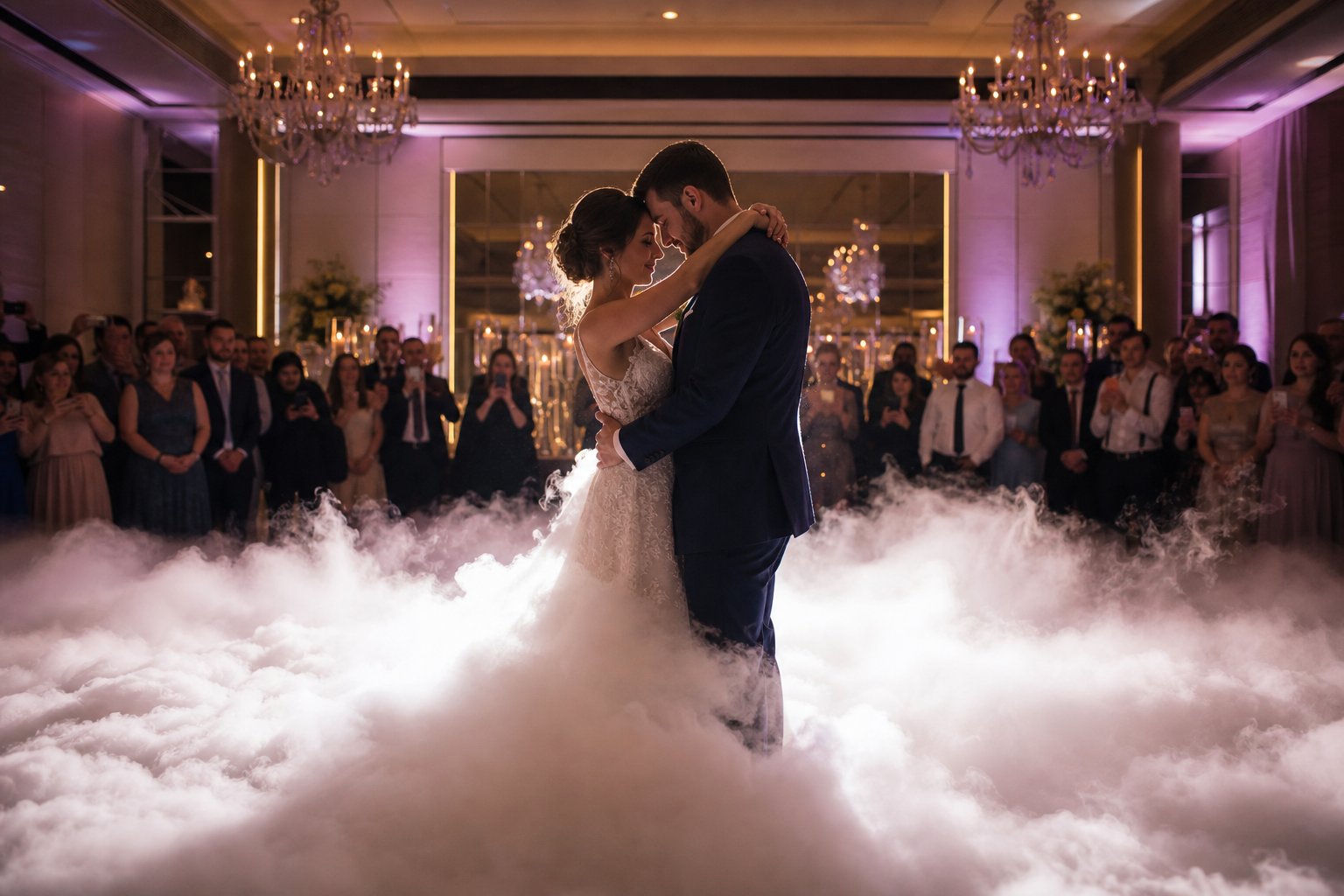
What should I ask about smoke effects for first dance?
Red-flag checklist for smoke effects for your first dance: what to ask venues and vendors, safety paperwork, effect types and photographer coordination.
What should I ask about smoke effects for first dance?
Booking smoke, dry ice or spark effects for a first dance turns a nice moment into a cinematic one, but it can also introduce safety, venue and photographic complications if you do not ask the right questions first. This checklist is written for couples and planners in the GTA who want clear, red-flag questions to ask venues and vendors, plus practical steps to make the effect look great on camera.
If you are weighing options with a DJ or production company, note that some local providers offer bundled services including DJ, MC, lighting, special effects and photo or video. If you want to see examples of combined production and effects in real weddings, review a provider portfolio such as B-Town Entertainment to understand how effects integrate with lighting and videography.
How to use this checklist when planning your first-dance effect
Use the checklist as a short decision flow: pick the visual you want, confirm venue acceptance, verify the operator and documentation, and coordinate timing with your photographer and DJ. Start the conversation with the venue manager before you sign any vendor contracts. Many venues require prior approval for any atmospheric effect, and some forbid particular machines or fuels, so get their guidance early to avoid last-minute changes. Industry guidance and DJ sources both stress that venue approval should come first (examples for venues and DJs).
When choosing an effect, consider two quick rules of thumb: dry-ice low fog works best for a "dancing on clouds" look, while cold sparks give a fountain-like, photo-ready finale. If you prefer persistent atmosphere for lighting, hazers can make beams visible without dense fog. Each option behaves differently around fire detection and ventilation, so the venue’s policy determines what is feasible; a DJ’s perspective on venue selection highlights why this matters (DJ Pav).
How dry ice, haze, smoke machines and cold sparks behave
Dry-ice low fog ("dancing on clouds")
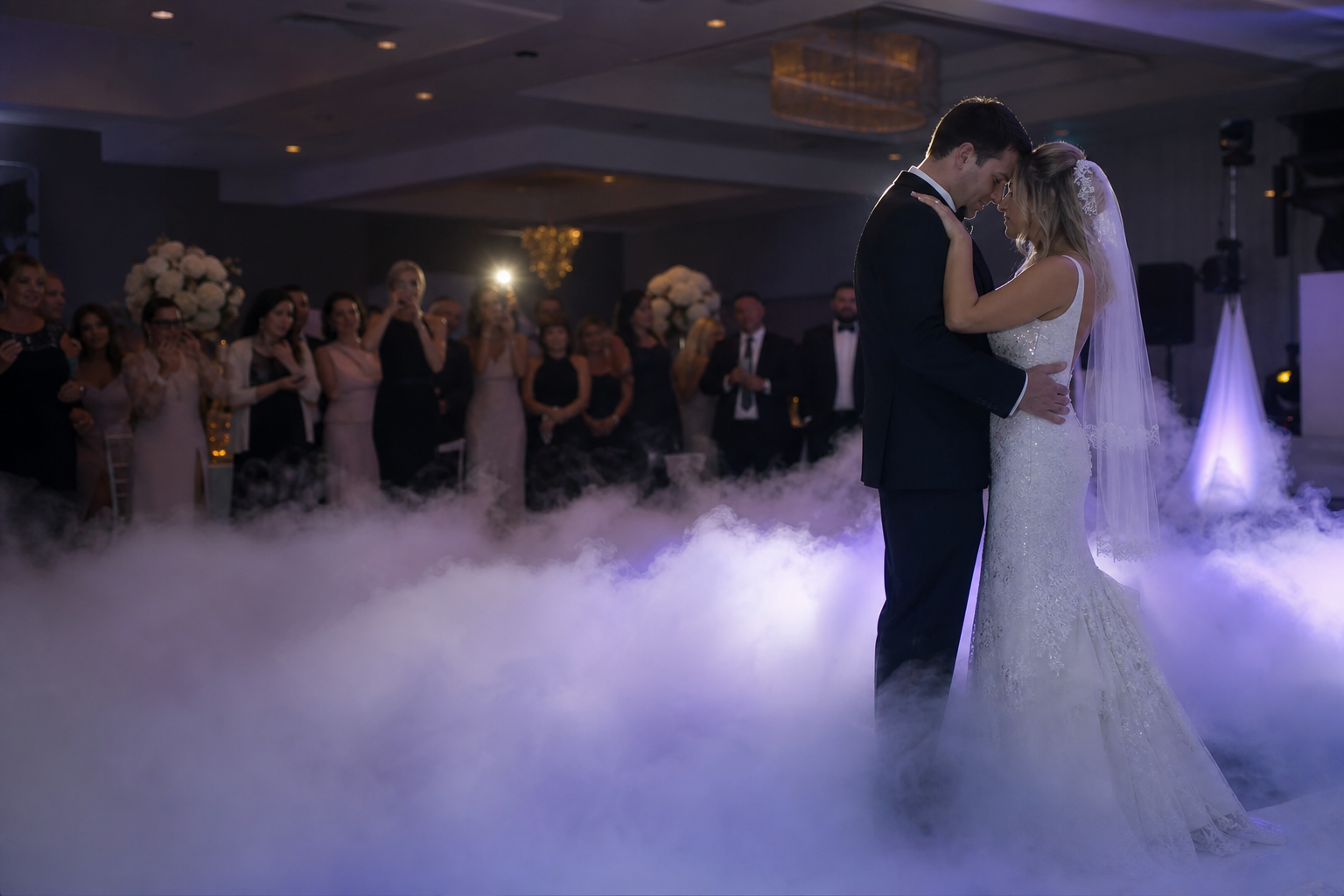
Dry-ice low fog creates a ground-hugging, cinematic cloud that sits low to the floor when used correctly. It is popular for first dances because it keeps faces clear for cameras while providing a magical look. Venues sometimes still require written approval because ventilation and detector placement vary. Before you commit, request a description of the planned dry-ice method and any venue test history (venue/DJ guidance).
Hazers and low-haze machines
Hazers produce a thin, long-lasting atmosphere that helps lighting beams show dramatically. They are ideal when lighting design is the priority, because the mist is subtle but persistent. Hazers are treated differently by venues than short-duration low fog because they maintain an airborne mist for longer periods, so operator technique and fluid choice matter to minimise detector risk (technical guidance on hazers).
Fog and smoke machines
Traditional fog machines create more visible airborne smoke and are more likely to trigger detectors if you do not test the venue first. They are powerful for atmosphere, but many indoor venues restrict or prohibit them. If you consider a fog machine, insist on a venue test and a written safety plan from the operator (safety and testing notes).
Cold spark machines
Cold spark machines create a fountain-like spark effect that looks like indoor fireworks but with far less smoke and no open flame. They are especially effective when timed to music and choreographed entrances. Cold sparks must be operated by a trained technician with clearly defined separation distances and insurance. Ask for machine specifications and examples of previous indoor use in similar venues (cold spark guidance).
Lighting alternatives
If detectors prohibit atmospheric effects, strong lighting techniques such as moving-heads, lasers and uplighting can still deliver cinematic results without adding fog. These options pair well with subtle low-lying fog or dry ice when permitted, and they are often the safest fallback when venue rules are strict (lighting alternatives).
Questions to ask venues and vendors before you book
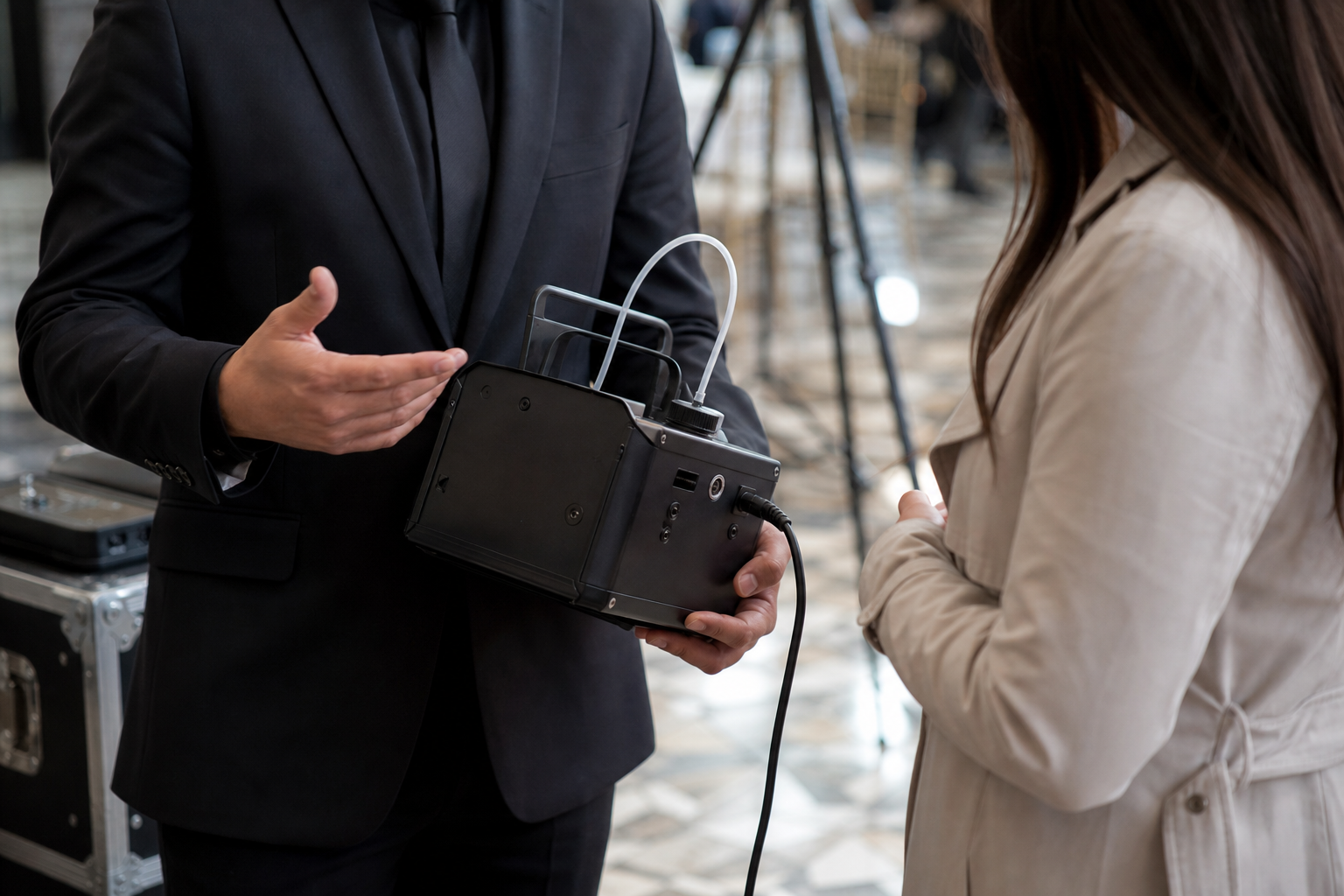
Read each question aloud on a planning call. Mark any red-flag answers in your notes and do not proceed until you have written confirmation for critical items.
- Venue approvals and alarm policy — "Does the venue permit dry ice, hazers, fog machines or cold sparks for indoor events? Can you provide written approval that lists any restrictions or required operator credentials?" Red flag: No written approval or verbal-only green light. Venue acceptance must be documented.
- Fire and detection testing — "Has the venue previously hosted this specific effect in the same room? Can we schedule a short detector test at low output before the event?" Red flag: Venue unwilling to allow a test or to discuss detector locations.
- Operator credentials and insurance — "Who will operate the machine on the day? Please provide the operator name, certificate of insurance and proof of worker coverage." Red flag: Vendor refuses to share insurance details or operator name. For indoor pyrotechnic alternatives, require an experienced operator and a certificate of insurance.
- Equipment and fluid safety documentation — "Can you provide the machine manual and the safety data sheet for the fluid or dry-ice procedure you plan to use?" Red flag: Vendor declines to supply an SDS or machine manual. Industry guidance recommends using the fluid manufacturer SDS and performing a risk assessment (hazers and fluids).
- Timing and cues — "Who triggers the effect and what exact song cue or timestamp will you use? Please confirm the expected duration and any delays between the cue and effect start." Red flag: Vague answers about timing or no willingness to rehearse cues. Cold spark devices and dry-ice uses require precise cues for photos and safety.
- Set-up footprint and load-in — "What space does your equipment require, and how long will setup and teardown take? Will you need special power, stage clearance or floor protection?" Red flag: Operator cannot specify footprint or power needs, which creates logistical surprises.
- Emergency cut-off and ventilation plan — "What is the plan to stop the effect quickly if an alarm or guest sensitivity issue occurs, and how will the space be ventilated afterward?" Red flag: No cut-off or ventilation plan documented.
- Rehearsal availability — "Can we schedule a short tech run or rehearsal with the photographer present to check sightlines and density?" Red flag: No rehearsal offered for a booked effect that changes camera visibility or guest safety.
These questions echo industry recommendations that couples should confirm venue acceptance before ordering effects and should request machine and fluid documentation from operators (read more).
Photographer and videographer coordination checklist
Coordinate with your photographer and videographer well before the day. Use this checklist to avoid blocked shots and to make the effect translate on camera.
- Share the exact song cue and timestamp so the photo and video team can anticipate the moment.
- Mark couple and photographer positions on the floor and confirm sightlines and backing lights. If fog is low, confirm camera elevation and lens choice to avoid faces being obscured.
- Ask the photographer about exposure and white balance plans for fog and sparks. Dense fog and bright sparks change metering and autofocus behaviour.
- Run a short rehearsal with effects off and then on so the crew can see how the atmosphere behaves in that room.
- Agree backup shots: if an alarm interrupts the effect, plan close-up shots and a short second performance without effects.
Photographers and videographers regularly recommend rehearsing with the effect to time choreography and camera moves because fog density and spark brightness alter framing and autofocus (rehearsal checklist).
Red flags and common mistakes couples make
- Booking effects without written venue approval — Mistake: Relying on a venue staff member's verbal approval. Fix: Get an emailed or signed document listing allowed effects and any limitations.
- Accepting a vendor who will not provide SDS or insurance — Mistake: Hiring a provider who avoids paperwork. Fix: Insist on a certificate of insurance and relevant SDS for any fluid used or the dry-ice procedure. If they refuse, find another operator.
- Mixing different fog fluids or machines — Mistake: Using different brands or fluid types in the same system. Fix: Use a single, documented fluid and follow the machine manufacturer guidance on flushing and maintenance to avoid unexpected reactions (manufacturer guidance).
- Skipping a tech rehearsal — Mistake: Assuming the effect will behave the same in every venue. Fix: Schedule at least one timed run with the photographer and the operator to confirm timing and density.
- Placing guests or equipment too close to cold sparks — Mistake: Underestimating safety distances. Fix: Require the operator to provide separation distances and to position devices where guests and flammable décor are not at risk (spark safety notes).
- Assuming dry ice never triggers alarms — Mistake: Believing dry ice is foolproof. Fix: Confirm with the venue and test if possible. Some detector systems remain sensitive to airborne particulate and require testing.
What written approvals and documents to get before the day
Store these documents with your vendor contracts and share them with the venue manager, photographer and planner.
- Venue-signed approval or email listing allowed effects and any restrictions.
- Operator certificate of insurance and proof of coverage for the day.
- Safety data sheet for any fog fluid, smoke fluid or machine-specific guidance for dry-ice use.
- Equipment inventory and operator name with contact details for event-day communication.
- Short emergency cut-off and ventilation plan outlining who will stop the effect and how the room will clear if required.
- Confirmed rehearsal time and a brief itinerary for the tech run.
Industry sources recommend documenting the SDS and any risk assessment for smoke and fog effects, and asking operators to show machine maintenance history if requested. These items protect you and the venue and streamline event-day decisions (operator documentation).
GTA-specific next steps and how B-Town can help
If you are planning in Brampton, Mississauga, Toronto or nearby cities, start by asking the venue manager for their special effects policy and then book a vendor who will coordinate directly with the venue. Bundling DJ, MC, lighting, effects and photo/video under one provider reduces cross-vendor miscommunication and simplifies timing for entrances and the first-dance cue. If you want a single point of contact that offers integrated production, request an instant quote or a planning call with B-Town Entertainment to review sample first-dance moments and confirm a timed demo for your venue.
Frequently asked questions
Will smoke effects trigger fire alarms?
They can. The risk depends on the effect type, detector placement and venue ventilation. Many venues require a test or written approval before indoor effects are used. Ask the venue to confirm detector locations and whether a scheduled test is possible, and document the response in writing.
What is the difference between dry ice low fog and a smoke machine?
Dry-ice low fog produces a heavy, ground-hugging cloud that stays near the floor when used correctly. Smoke machines create more visible airborne fog and increase the likelihood of triggering detectors. Both require operator knowledge and venue approval; industry guidance advises a risk assessment and the fluid manufacturer safety data sheet for machine operation.
How do cold sparks differ from indoor pyrotechnics and are they safe indoors?
Cold sparks mimic indoor fireworks with bright, fountain-like effects but generate much less smoke and no open flame. They are considered an indoor-friendly pyrotechnic alternative when operated by a trained technician with proper separation distances and insurance. Always request machine specs and proof of previous indoor use in similar venues.
Who is responsible for getting venue approval for smoke effects?
Responsibility is shared. The couple or planner should request venue policy and written approval, and the vendor should provide documentation, SDS and operator credentials. Confirm that the venue and vendor communicate directly and that the approval is recorded in writing.
How should we coordinate timing with our photographer, DJ and effects operator?
Share the exact song cue and timestamp, schedule a short tech run with the photographer present, mark positions on the floor, and agree on a backup shot plan in case the effect must be cut short. Precise cueing is essential for cold sparks and dry-ice effects to sync with choreography and camera moves.
To request an instant quote, view sample first-dance productions, or book a timed planning call, contact B-Town Entertainment for coordinated DJ, effects and media packages that bring these elements together under one team.